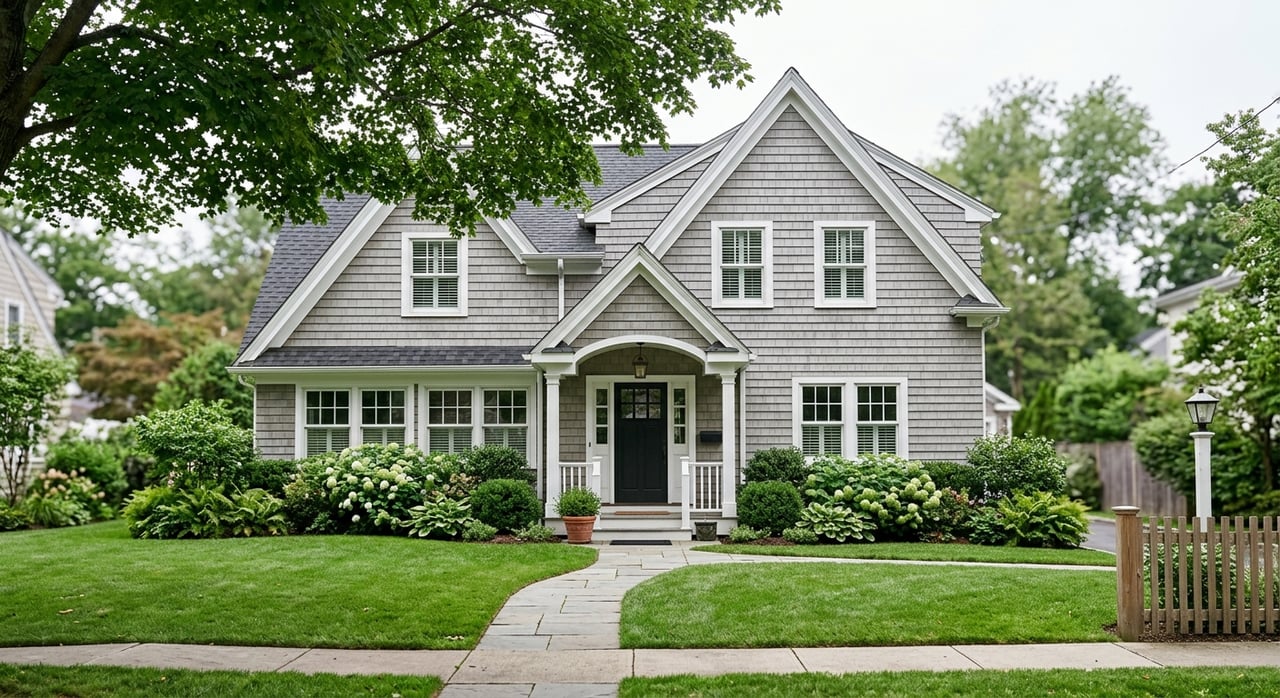
East Greenwich Schools and Home Values: What to Know
May 14, 2026
May 14, 2026
Buying or selling in East Greenwich often starts with one big question: how much do schools really affect home values? If you are weighing neighborhoods, comparing streets, or trying to price your home accurately, that question matters more here than in many larger markets. In a compact town where school assignments can change from one street to the next, understanding the school factor can help you make a smarter move. Let’s dive in.
East Greenwich is a relatively small coastal town on Narragansett Bay, covering 16.71 square miles and bordered by Warwick and North Kingstown. The local school district serves about 2,500 students across six schools, including one high school, one middle school, two upper elementary schools, and two lower elementary schools.
That scale matters in real estate. In a smaller town, school quality and school assignment can become a more visible part of how buyers compare homes. When buyers see a limited supply of homes in certain school paths, that demand can show up in sale prices.
The district reports a 93.4% four-year graduation rate and per-pupil spending of $19,940. Those are some of the data points buyers may look at when they try to understand the local school system and how it connects to long-term value.
One of the most important things to know about East Greenwich is that the school conversation is not simply about living anywhere in town. Elementary assignment is address-based, not just neighborhood-based. That means two homes that seem close together may feed into different elementary schools.
The district’s transportation and school zone information shows that streets are assigned to either the Frenchtown/Eldredge path or the Meadowbrook/Hanaford path. The district also notes that the address list is for reference and can change, which makes address-level verification especially important during a home search.
For buyers, this means you should look beyond the town name or even the neighborhood name. The exact street address can influence the elementary feeder pattern, daily convenience, and how future buyers may view the property.
When buyers research schools online, they usually run into more than one rating system. In Rhode Island, the official state report cards use a 1-to-5-star accountability system based on several measures, including achievement, growth, graduation, English-language proficiency, and school quality or student success.
GreatSchools uses a separate 1-to-10 scale. These systems are not equivalent, so it is important not to compare them as if they mean the same thing. A careful home search should treat them as different tools, not interchangeable scores.
In GreatSchools, East Greenwich High School is listed as 10/10, Archie R. Cole Middle School as 8/10, James H. Eldredge School as 8/10, and George Hanaford School as 7/10. Frenchtown School and Meadowbrook Farms School are currently shown as unrated on that platform.
That last point matters. An unrated school does not automatically mean weak performance. It may simply mean the visible composite rating is limited on that specific platform, so buyers should avoid jumping to conclusions based on one screen.
In East Greenwich, school value is often tied to the full feeder path and the day-to-day experience of living at a specific address. That includes not only school assignment, but also transportation rules that can affect convenience for a household.
The district notes that all Frenchtown students receive bus service. Meadowbrook, Hanaford, and Eldredge students receive bus service beyond one walking mile, while Cole students receive it beyond 1.5 miles and East Greenwich High School students beyond 1.75 miles.
That may sound like a small detail, but buyers often think in practical terms. School access is not only about reputation. It can also be about logistics, commute rhythm, and how well a home fits your routine.
East Greenwich’s March 2026 citywide median sale price was $625,000, up 17.9% year over year, with homes averaging 32 days on market. That gives you a useful snapshot of the overall market, but it does not tell the whole story.
Within town, neighborhood-level medians vary quite a bit. Reported median sale prices were $520,000 in Downtown East Greenwich, $620,000 in Frenchtown, $745,000 in Nichols Corner, and $975,000 in Tillinghast.
Those differences show why school conversations should always be paired with hyper-local housing analysis. A strong school path may support demand, but sale prices are still shaped by housing style, lot size, inventory, condition, and micro-location.
It is easy to assume that homes near highly regarded schools will always command the highest prices. In reality, school access is just one factor in a larger pricing picture.
In East Greenwich, a neighborhood may attract strong buyer interest because of school assignment, but similar homes can still sell at different price points based on features unrelated to schools. Buyers may pay more for updated condition, larger lots, walkability, or lower inventory in a particular pocket.
That is why broad statements can be misleading. In this market, the better question is not, “Do schools affect value?” The better question is, “How do schools affect value for this exact home, on this exact street, compared with recent nearby sales?”
If you are buying in East Greenwich, it helps to compare several things at once rather than relying on a single school score or a townwide price number.
Focus on these key items:
This approach gives you a more realistic picture of value. It can also help you avoid overpaying based on assumptions that are too general for a street-by-street market like East Greenwich.
If you are selling, school-related demand can be a real advantage, but it works best when it is presented accurately. Buyers today tend to research quickly, and they often arrive with partial information from school rating sites and listing apps.
That creates an opportunity to position your home clearly. Instead of making broad claims, it is better to anchor your pricing and marketing around facts such as the property’s verified school assignment, current market activity in the neighborhood, and the overall appeal of the home itself.
A strong pricing strategy in East Greenwich usually blends three things:
That combination is often more persuasive than leaning too heavily on school reputation alone.
The district’s 2025 budget materials show 2,482 students in the October 1, 2024 snapshot and 2,468 students as of January 31, 2025. That was down from 2,511 a year earlier.
The same materials list 18 homeschool students, 12 career-and-tech students, and 12 charter-school students in 2024-25. For buyers, this suggests the district remains stable while families still have other educational options.
That kind of context can matter when you are deciding how much of a premium feels justified. It reminds you that school value is real, but it still sits within a broader set of choices families make.
In East Greenwich, schools do influence local home values, but the effect is rarely simple. Because elementary boundaries are address-based and home prices vary widely across different pockets of town, the most accurate answer always starts at the property level.
If you are buying, that means verifying the exact assignment and comparing nearby sales carefully. If you are selling, that means pricing and positioning your home with a clear understanding of how school access fits into the bigger local market story.
When you want real clarity on how a specific address, neighborhood pocket, and school path may affect your next move in East Greenwich, the local details matter. The Phipps Team at Compass can help you evaluate the data and move forward with confidence.
September 17, 2026

September 10, 2026
September 3, 2026
August 27, 2026

August 20, 2026
August 13, 2026
August 6, 2026
August 6, 2026
July 23, 2026
Whether buying or selling homes, unlock a seamless and personalized experience tailored to your unique needs. Let's navigate the Rhode Island real estate market together and turn your dreams into reality.