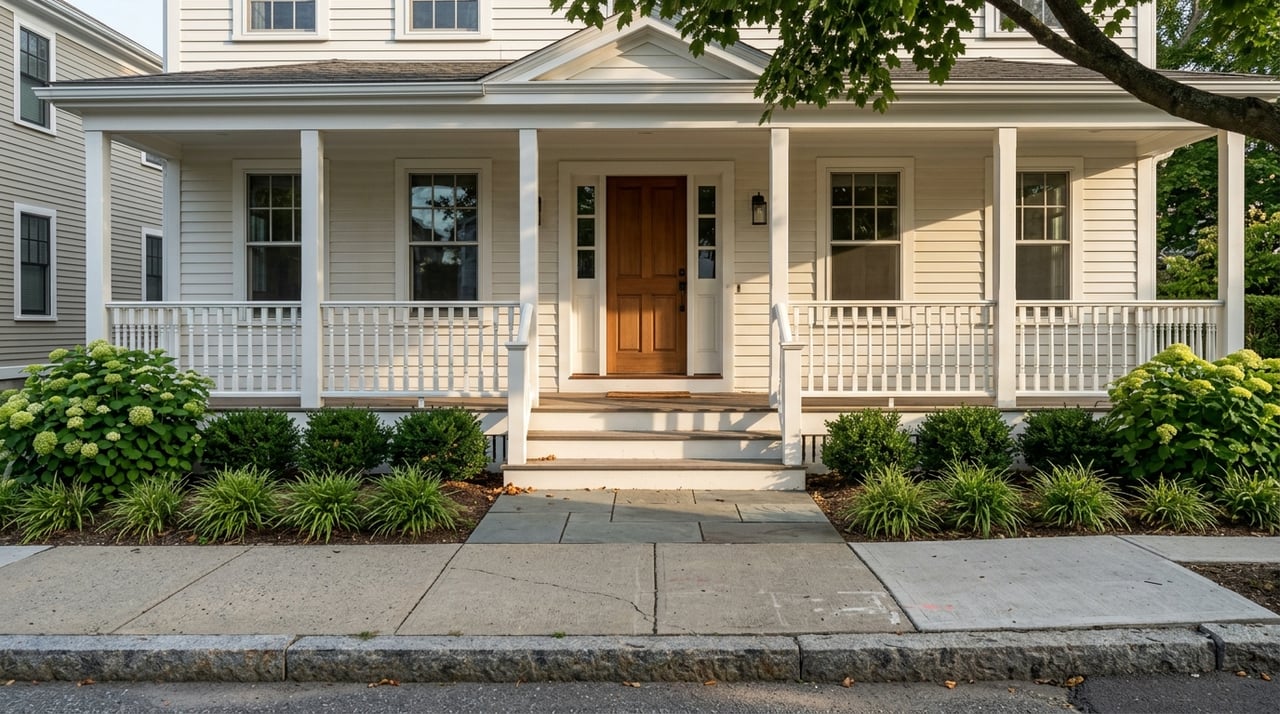
Car Free Living in Providence RI: Best Neighborhoods
June 25, 2026
June 25, 2026
If you want to live in Providence with less time behind the wheel, you are not imagining things. Providence can support a car-light lifestyle better than many Rhode Island communities, especially if your daily routine lines up with the right streets, transit corridors, and mixed-use areas. If you are thinking about where to rent or buy, this guide will help you understand where car-light living is most practical, what tradeoffs to expect, and how to choose a neighborhood that fits your routine. Let’s dive in.
Providence has several traits that make car-light living more realistic than many people expect. The city had a population density of 10,373.5 people per square mile in the 2020 Census, and the 2020-2024 American Community Survey reported a mean travel time to work of 25.0 minutes. A Rhode Island transportation planning report also noted that about 18.2% of Providence households had no vehicle access in the 2023 1-year ACS, which is well above the statewide share.
City planning also supports the basic idea. Providence’s Comprehensive Plan describes compact, walkable neighborhoods and neighborhood commercial and mixed-use areas. The city’s capital plan prioritizes sidewalk repairs and pedestrian improvements, and recent zoning discussions have included reducing or eliminating parking minimums.
That said, Providence is not evenly easy without a car. The most accurate way to think about it is car-light in corridors, not car-free everywhere. The closer you are to a strong bus route, a walkable commercial street, and a bike-friendly connection, the easier daily life tends to be.
If you want the strongest car-light setup in Providence, start with the core downtown districts. RIPTA’s Downtown Transit Connector runs every 5 minutes between Providence Station and Rhode Island Hospital, with six stops in the Hospital District, Jewelry District, Downcity, and Capital Center. The route includes bus-only lanes, quality shelters, real-time information, and pedestrian-oriented stop design.
This part of the city also makes it easier to connect beyond your own neighborhood. Providence Station ties into RIPTA’s intermodal network with bus connections, Amtrak and MBTA commuter rail service, public bike racks, and a seasonal shuttle linking the train station, downtown, the convention center, and the ferry terminal. For buyers or renters who expect to combine walking, transit, and occasional rail travel, this is one of the clearest fits.
The East Side is another strong option, especially if you want easier access to downtown without giving up neighborhood-scale commercial areas. RIPTA says the East Side Transit Tunnel connects downtown Providence to the East Side and supports direct bus travel on dedicated lanes. The tunnel entrance on Thayer Street helps make that corridor especially transit-aware.
Planning materials also point to areas that support day-to-day errands on foot. The foot of College Hill is described as an important commercial and residential transition point between the neighborhood and downtown. Another neighborhood plan describes the primary Hope Street commercial area, between Rochambeau Avenue and Fifth Street, as a pedestrian-oriented strip of small shops and restaurants.
For many households, this part of Providence works well because it blends local convenience with access to the rest of the city. You may still want a car for some trips, but it can be easier to rely on walking and bus service for a meaningful share of your routine.
Fox Point and the Wickenden Street corridor are among the clearest mixed-use pockets for car-light living on the East Side. Planning documents for the Fox Point waterfront call for active mixed use, streetscape improvements, pedestrian improvements, and public access to the water. A City Plan Commission staff report describes Wickenden Street as a main street defined by mixed-use development with pedestrian-oriented needs like retail and housing in buildings oriented toward the street.
What that means in practice is simple. If your daily pattern includes nearby errands, restaurants, services, and trips toward downtown or the East Side, this area can be very workable with one car or even no car. It tends to reward people who value proximity and are comfortable doing more of life on foot.
Federal Hill and the Broadway corridor can also work well for car-light households, especially if your regular destinations stay fairly close to downtown. RIPTA’s Route 27 serves Broadway and Manton, while Route 92 connects Rhode Island College, Federal Hill, and the East Side. Those routes give this part of the city a direct relationship to the downtown transfer center and to East Side destinations.
This can be a practical fit if you want an urban neighborhood feel with access to several key parts of Providence. The experience may be less seamless than living right on the strongest downtown transit spine, but it can still support a lower-car lifestyle if your routine matches the network.
In Providence, car-light living often works best when you combine modes instead of relying on just one. RIPTA says its buses connect with trains, ferry service, bike paths, and the airport, and all fixed-route buses have bike racks. Public bike racks are also available at Providence Station and Kennedy Plaza.
The city is also investing in the Woonasquatucket River Greenway as an accessible urban trail. The Downtown Transit Connector adds bike lanes along portions of its corridor, which helps biking and transit work together more smoothly.
For many residents, the real formula is neighborhood first. You walk to nearby errands, use RIPTA to reach downtown or the East Side, and combine biking and transit when a trip is less convenient by bus alone. That pattern matches how Providence connects core corridors to Providence Station, Kennedy Plaza, and the bike network.
If you are buying or renting with a car-light goal, your address matters a lot. In Providence, a few blocks can make a meaningful difference in how easy your routine feels. Looking at a map is helpful, but it is even better to think through your actual week.
Here are a few smart questions to ask as you evaluate a home:
A home that looks close on paper may feel very different in daily life depending on hills, crossings, transit frequency, and how often you need to travel outside the core corridors.
The biggest tradeoff with car-light living in Providence is flexibility. It is most realistic when your work, school, and errands cluster near downtown, College Hill, Fox Point, Wickenden, Hope Street, or Broadway. It becomes less seamless when your life depends on later-night travel, frequent cross-town trips, or destinations outside the main RIPTA corridors.
It is also important to keep the larger regional context in mind. Rhode Island overall remains car-centric, even though Providence has a much higher share of households without vehicle access than the state as a whole. So while Providence can absolutely support a lower-car lifestyle, it may still feel different from larger transit-heavy cities.
That does not make the lifestyle unrealistic. It just means your success depends more on matching your home to your routine than on assuming the entire city works the same way.
You may be a strong fit for car-light living in Providence if you work near downtown, use the train regularly, or prefer neighborhoods where daily needs are close at hand. It can also make sense if you want to own one car instead of two and would like more flexibility in how you move through the city.
This lifestyle can be especially appealing if you value walkability, shorter local trips, and the ability to mix transit with biking or rail travel. On the other hand, if you regularly commute across the region, keep a late schedule, or need to reach many places not served well by core corridors, you may want to plan for more car use.
When clients ask about car-light living, the best answer is usually not about the whole city. It is about matching a specific home to the way you actually live. Providence offers real opportunities for a lower-car lifestyle, but those opportunities are strongest in well-connected pockets rather than across every block.
If your goals include convenience, flexibility, and a neighborhood feel, it is worth looking closely at Downtown, the Jewelry District, Capital Center, College Hill, the East Side, Hope Street, Fox Point, Wickenden, Federal Hill, and Broadway. The right fit depends on where you need to go most often and how you prefer to get there.
If you are weighing Providence neighborhoods and want local guidance on how lifestyle, location, and housing options line up, the Phipps Team at Compass can help you sort through the details and find a home that supports the way you want to live.
October 22, 2026
October 15, 2026
October 8, 2026
October 1, 2026
September 24, 2026
Phipps Team | September 17, 2026

September 10, 2026
September 3, 2026
August 27, 2026
Whether buying or selling homes, unlock a seamless and personalized experience tailored to your unique needs. Let's navigate the Rhode Island real estate market together and turn your dreams into reality.